By far the best Harry Potter trailer I have ever seen.


The four spinal nerve plexi and one nerve from each plexus are:
| Cervical - | Phrenic nerve |
| Brachial - | Radial nerve |
| Lumbar - | Femoral nerve |
| Sacral - | Sciatic nerve |
The lateral ventricles are connected to the third ventricle by the right and left interventricular foramina while the third ventricle is connected to the fourth ventricle by the cerebral aquaduct
The central sulcus divides the frontal/parietal lobes.
The longitudinal fissure divides left/right hemispheres of the cerebrum.
The parietiocciptal sulcus divides parietal/occipital lobes.
The lateral fissure divides the parietal/temporal lobes.
The transverse fissure divides parietal/occipital lobes.
Many spinal tracts undergo decussation to communicate across the mid-sagittal plane.
Rostral means towards the nose.
Spinal nerves are considered mixed nerves because they consist of bundles of axons carrying sensory information as well as bundles of axons carrying motor information.
The gray matter of the spinal cord is located in the deep layers of the spinal cord and deep to the white matter.
The medulla oblongata is the portion of the brainstem most involved in control of heart rate, blood pressure, and respiratory rate.
CSF (cerebrospinal fluid) is produced in areas known as choroid plexi.
 The three major branches from the aortic arch are the right brachiocephalic trunk, left common carotid artery, and the left subclavian artery.
The medial cubital vein is a connection of the radial, ulnar, basilic and brachial veins, is found on the anterior portion of the elbow and is a common site for blood draws.
The renal artery supplies the kidneys with blood while the hepatic artery supplies the liver with blood.
The hole in the diagram that major blood vessels pass through is the aortic hiatus.
The longest blood vessel in the body is the great saphenous vien.
The portion of the descending aorta which is superior to the diaphragm is the thoracic aorta.

From abcnews.com-
I know you're right Mom, large cars are safer. But as a college student it almost seems necessary to have a small car because of the cramped parking lots and busy traffic all around campus. So which is it? The "small" or "big" car?
I have driven a small car and larger car extensively and both definitely have their upsides. I love my smaller car for around town and going to school, being able to pull into a parking spot and not worry about the close calls. It is more get up and go and easier to stop and go at stoplights. But when it comes to highway driving and long trips the larger car is essential. I have made long trips in both cars and nothing can compare to the comfort and ease at putting on the cruise control and rolling down the road. The 4 cylinder versus V6 makes a big difference to me too. Also the speaker system seems to be better in large cars and I don't feel intimidated by other cars on the road.
So I guess the biggest thing I would look for in a car would be a car that's small but not too small, big engine but cheap (yeah right), nice speaker system, and when I turn it on - it has to return the favor.
Over at firstshowing.net they say that Warner Bros and MGM, the studios behind 'The Hobbit' are "doing all they can" to get Peter Jackson to direct the now directorless film. 

"...Jackson said that he wasn't opposed to the idea a few weeks ago, but wasn't really that interested either, only if they they can't find anyone else and if his other production agreements allows him to fit it in. Well, once you hear some of these alternative candidates, you might crying out for Jackson to direct this highly anticipated adaptation as well.I was getting used to the idea of del Toro directing, and sense PJ had approved of him and they were so alike I was even liking the idea. But now I just don't know what's going to happen. Please please please just make a good movie, whoever the director will be.
Fleming says that "nobody has been offered the helming job" yet, but they want Jackson to "complete the franchise he started with three LOTR films." He helped co-write the scripts for The Hobbit and is producing, so it would obviously be an easy fit. "Warner Bros and MGM braintrust will keep pursuing him until Jackson gives a definitive no." As for some other potential candidates? Fleming says David Dobkin (of Shanghai Knights, Wedding Crashers, Fred Claus), which is just plain idiotic; David Yates (of the last four Harry Potter movies: Order of the Phoenix, Half-Blood Prince, and Deathly Hallows Part I & II) which SlashFilm reported; and finally, the infamous Brett Ratner (of Rush Hour 1-3, Red Dragon, X-Men: The Last Stand)."

Owen Gleiberman over at EW.com has released his review of 'Toy Story 3'.
I have to say that reading it gave me hope that there may still be good movies to be made. Although it's a sequel it still brings original ideas and pulls the audience in. I am planning to see this promptly; especially after reading this review.
"You won't be alone if you go to see Toy Story 3 with ginormous expectations. After 15 years, the original Toy Story remains — to me — the most ticklish, delightful, and transporting of all Pixar films; its menagerie of innocently devoted, jabbering bedroom toys has become as beloved a part of the American pop culture family as the Simpsons or the Seven Dwarfs. Walking into this second sequel, I knew what I wanted: to be carried away, yet again, by the antic charm of Woody the noble, common-sense cowboy (voiced by Tom Hanks with his trademark acerbic snap), the irresistibly self-adoring action figure Buzz Lightyear (Tim Allen), the cranky Mr. Potato Head (Don Rickles), the mouse-that-roared dinosaur Rex (Wallace Shawn), the squeaky-cool alien LGMs, and the rest of the gang. I yearned to be dazzled and touched by the speed and repartee, and by action scenes that have a kiddie Indiana Jones ingenuity. I wasn't disappointed. Yet even with the bar raised high, Toy Story 3 enchanted and moved me so deeply I was flabbergasted that a digitally animated comedy about plastic playthings could have this effect."
To read more of the review head over to EW.com
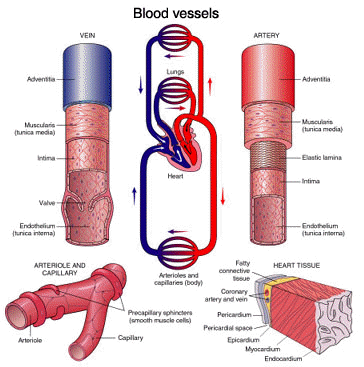
Arteries - blood away from heart
Capillaries - exchange vessels
Viens - blood to the heart
The vessel wall
Tunica interna
Simple squamous epithelium or endothelium
Loose connective tissue
Tunica media - muscle layer
Smooth muscle and collagen fibers, some elastic fibers in arteries
Provides vasoconstriction and vasodilation
Tunica externa - gives the vessel it's round shape
Loose connective tissues that anchors vessel in place Arteries
Resistance vessels - maintain shape when empty or cut
Conducting or elastic arteries - large
Tunica media has many elastic fibers
Distributing or muscular arteries
Distribute blood to specific organ
Mostly smooth muscle
Usually have individual names
Resistance vessels
Smallest are called arterioles
Some end in metarterioles or precapillary sphincters (gate)
Arterial Sense Organs
Monitor blood pressure and blood chemistry and transmit to the brainstem to regulate heartrate, vasomotion, and respiration.
Carotid sinuses - baroreceptors in carotid artery and innervated by glossopharyngeal nerve to help adjust heartrate and blood pressure (monitors bp)
Carotid bodies - chemoreceptors in carotid artery that monitor carbon dioxide, oxygen and pH levels of blood, send signal via vagus and glossopharyngeal nerves to adjust respiration and kidney function
Aortic bodies - same as chemoreceptors in carotid bodies, but located in the aortic arch
Capillaries
Exchange vessels
Consist of only tunica interna
In every tissue except: tendons, ligaments, cartilage, epithelia, and the cornea and lens of the eye
Types of capillaries: (based on cellular junctions and permeability)
Continuous capillaries - BBB (Blood Brain Barrier), stomach lining
Fenestrated capillaries - most common, skeletal muscles
Sinusoids - more holes than cells, in hypothalamus and liver
Capillary beds
Thoroughfare channels - capillaries to arterioles
Tendons and ligaments are avascular so there is little blood supply to give nutrients and allow them to heal. This is why it takes less time for bones to mend than sprains or strains.
Also, the crazy German scientist who created Body Worlds that travels around the globe used a process called Plastination to keep the bodies the way they are. This works at an intercellular level allowing only blood vessels or muscles for example to be kept in place while all the other bodily tissues go away. Veins
Capacitance vessels - large capacity
Postcapillary venules - mostly tunica interna, somewhat permeable
Muscular veins - 1 to 2 layers of tunica media
Medium veins - have individual names and all tissue layers
Venous layers - many femoral valves (to prevent varicose veins)
Venous sinuses - normal varicose veins where blood is SUPPOSED to pool
Large veins
Mostly tunica externa
60% of our blood is in our veins @ all times because it is more difficult and takes longer for the blood to go against gravity back up to the heart from our limps.
Circulatory Routes
Typical route:
heart - arteries - capillaries - veins - heart
Exceptions to the typical route:
Portal systems
Anastomosis
Arteriovenule anastomosis - arteriole to venule
Arterial anastomosis - two arteries to one capillary bed
Venous anastomosis - more than one vein draining capillary beds
Capillaries - exchange vessels
Viens - blood to the heart
The vessel wall
Tunica interna
Simple squamous epithelium or endothelium
Loose connective tissue
Tunica media - muscle layer
Smooth muscle and collagen fibers, some elastic fibers in arteries
Provides vasoconstriction and vasodilation
Tunica externa - gives the vessel it's round shape
Loose connective tissues that anchors vessel in place
 Arteries
Resistance vessels - maintain shape when empty or cut
Conducting or elastic arteries - large
Tunica media has many elastic fibers
Distributing or muscular arteries
Distribute blood to specific organ
Mostly smooth muscle
Usually have individual names
Resistance vessels
Smallest are called arterioles
Some end in metarterioles or precapillary sphincters (gate)
Arterial Sense Organs
Monitor blood pressure and blood chemistry and transmit to the brainstem to regulate heartrate, vasomotion, and respiration.
Carotid sinuses - baroreceptors in carotid artery and innervated by glossopharyngeal nerve to help adjust heartrate and blood pressure (monitors bp)
Carotid bodies - chemoreceptors in carotid artery that monitor carbon dioxide, oxygen and pH levels of blood, send signal via vagus and glossopharyngeal nerves to adjust respiration and kidney function
Aortic bodies - same as chemoreceptors in carotid bodies, but located in the aortic arch
Capillaries
Exchange vessels
Consist of only tunica interna
In every tissue except: tendons, ligaments, cartilage, epithelia, and the cornea and lens of the eye
Types of capillaries: (based on cellular junctions and permeability)
Continuous capillaries - BBB (Blood Brain Barrier), stomach lining
Fenestrated capillaries - most common, skeletal muscles
Sinusoids - more holes than cells, in hypothalamus and liver
Capillary beds
Thoroughfare channels - capillaries to arterioles
Tendons and ligaments are avascular so there is little blood supply to give nutrients and allow them to heal. This is why it takes less time for bones to mend than sprains or strains.
Also, the crazy German scientist who created Body Worlds that travels around the globe used a process called Plastination to keep the bodies the way they are. This works at an intercellular level allowing only blood vessels or muscles for example to be kept in place while all the other bodily tissues go away.
VeinsCapacitance vessels - large capacity
Postcapillary venules - mostly tunica interna, somewhat permeable
Muscular veins - 1 to 2 layers of tunica media
Medium veins - have individual names and all tissue layers
Venous layers - many femoral valves (to prevent varicose veins)
Venous sinuses - normal varicose veins where blood is SUPPOSED to pool
Large veins
Mostly tunica externa
60% of our blood is in our veins @ all times because it is more difficult and takes longer for the blood to go against gravity back up to the heart from our limps.
Circulatory Routes
Typical route:
heart - arteries - capillaries - veins - heart
Exceptions to the typical route:
Portal systems
Anastomosis
Arteriovenule anastomosis - arteriole to venule
Arterial anastomosis - two arteries to one capillary bed
Venous anastomosis - more than one vein draining capillary beds
I found this while searching for heart images? Don't ask me how. Anyway, I watch cash cab often and I found this really funny and thought I'd share -
CRASH CABMore funnies can be found over at laughterhouse.org
INT. TAXI CAB - NIGHT
BYRIN opens the door to a cab and gets inside. The driver
sitting with his head leaned up against the window, jumps
when BYRIN gets in the cab.
BEN
Uhh, where to, buddy?
GRIG
33rd and Lex, please.
BEN
You got it.
BEN begins to drive off. As he does, the roof of the cab
lights up, flashing and music plays. The driver is just as
surprised as the passenger.
BEN (CONT'D)
Oh yeah!
(Smacks forehead.)
You're in the Cash Cab. It's a TV
game show played right here in my
taxi.
(Hic.)
I'm your host, Ben Bailey, and I'll
ask you general knowledge questions
until we reach your destination.
Whaddya say, You In?
GRIG
Cool! Yeah, definitely!
BEN
Alright! For your first question,
and $50, uh...
BEN pauses and looks around the cab.
BEN (CONT'D)
What have I been drinking?
GRIG
Drinking? ... Only water, I hope.
BEN
Sorry - wrong answer!
A red 'x' flashes across the screen.
BEN (CONT'D)
And your first strike. Two more of
those and you'll have to get out
and walk!
BEN turns around to face GRIG.
BEN (CONT'D)
The correct answer, of course, is
Ben's Bailey's.
(Chuckles.)
The cab swerves off the road and a scream is heard as a
pedestrian thuds across the hood and windshield of the car.
GRIG
Oh, Jesus Christ! Oh, oh my god!
BEN
Uh oh.
GRIG
Oh my god, dude, you just hit that
woman! Pull over, we have to help
her!
BEN
Oh jeez. Okay, well ... listen.
GRIG
What!?
BEN
If I get another DUI, I'll lose my
license. I'll lose my job. Please,
you gotta help me. I'll give you
$2000 if you can keep this to
yourself...
And answer the following question:
In what century was the Brooklyn
Bridge built?
GRIG
(Still frantic and angry.)
I don't know. The 1800's?
The lights flash and music plays.
BEN
Correct! You win $2000 and we've
reached your destination!
GRIG starts laughing, clapping his hands, and bouncing around
the car!
GRIG
$2000! Oh my god, I can't believe I
won!
CUT TO:
GRIG getting out of the cab and jumping up and down on the
streets with a fistful of cash.
FADE TO BLACK.
Some information regarding The Heart (doo doo doooooo!):
There should always be 5-6 liters of blood in the human body
Gross anatomy
The heart wall consists of 3 different tissues:
Epicardium - the surface of the heart
Myocardium - contractile muscles of the heart
Cardiocytes
Endocardium - internal lining, simple squamous epithelium
Heart valves
Ensure one-way flow of blood
Consist of 2 or 3 cusps
Tricuspid valve - between right atrium and right ventricle
Bicuspid (Mitral) valve - between left atrium and left ventricle
Chordae tendineae - 'cords of tendon'
Papillary muscles - stabilize heart valves
Pulmonary semilunar valve - between systemic circuit and right atrium
Aortic semilunar valve - between left ventricle and aorta
 Cardiac Conduction System
75 bpm on average in a resting adult
Myogenic - muscle cell, generates electricity
Autorhythmic - creates electricity while ignoring brain
Conduction system consists of modified cardiocytes
Sinoatrial (SA) node - group of myogenic cells
Atrioventricular (AV) node
AV bundles
Left and right bundle branches
Moderator band of R. ventricle
Purkinje fibers - fingerlike projections into ventricles
Cardiac muscle
Striated, but short, thick and branched
Fibers contain only one centrally placed nucleus
Cardiocytes are joined end to end by intercalated discs - allows cells to communicate

I liked this picture lol
There should always be 5-6 liters of blood in the human body
Gross anatomy
The heart wall consists of 3 different tissues:
Epicardium - the surface of the heart
Myocardium - contractile muscles of the heart
Cardiocytes
Endocardium - internal lining, simple squamous epithelium
Heart valves
Ensure one-way flow of blood
Consist of 2 or 3 cusps
Tricuspid valve - between right atrium and right ventricle
Bicuspid (Mitral) valve - between left atrium and left ventricle
Chordae tendineae - 'cords of tendon'
Papillary muscles - stabilize heart valves
Pulmonary semilunar valve - between systemic circuit and right atrium
Aortic semilunar valve - between left ventricle and aorta
 Cardiac Conduction System
75 bpm on average in a resting adult
Myogenic - muscle cell, generates electricity
Autorhythmic - creates electricity while ignoring brain
Conduction system consists of modified cardiocytes
Sinoatrial (SA) node - group of myogenic cells
Atrioventricular (AV) node
AV bundles
Left and right bundle branches
Moderator band of R. ventricle
Purkinje fibers - fingerlike projections into ventricles
Cardiac muscle
Striated, but short, thick and branched
Fibers contain only one centrally placed nucleus
Cardiocytes are joined end to end by intercalated discs - allows cells to communicate

Subscribe to:
Posts (Atom)


 Call Me Kris visitors